
A Deeper Dive with Kehrer Group’s Advisor Level Database
We analyzed the Kehrer Group benchmarking data and saw that there was only a weak correlation between the average advisor book size in a firm and its average advisor plan productivity or average household plan penetration; the larger the average book, the less planning advisors did, on average. But the relationship is not statistically significant.
Of course, in each firm we see considerable variation among advisors in how many advisors have embraced planning. It is not unusual for a small minority of a firm’s advisors to do most of the planning, while many do hardly any planning. Comparing firm averages might mask the real impact of rightsizing book size on advisor planning activity.
Multivariate analysis of our proprietary database of 3,000 advisors from 175 banks and credit unions enables us to isolate the impact of the size of an advisor’s book on planning activity from other factors. We can estimate how much planning activity an advisor does, taking into account their book size, AUM, tenure, deposit territory, share of revenue derived from advisory business, whether they have access to a sales assistant, whether they are in a team, and other characteristics. Essentially, we are creating statistically identical advisors who differ only in their financial planning activity.
Let’s look at the average advisor in the database (who is 46 years old, has 495 clients, 6.2 years of tenure, and advisory revenue accounts for 26% of revenue) and see what difference 100 clients make on their planning activity.
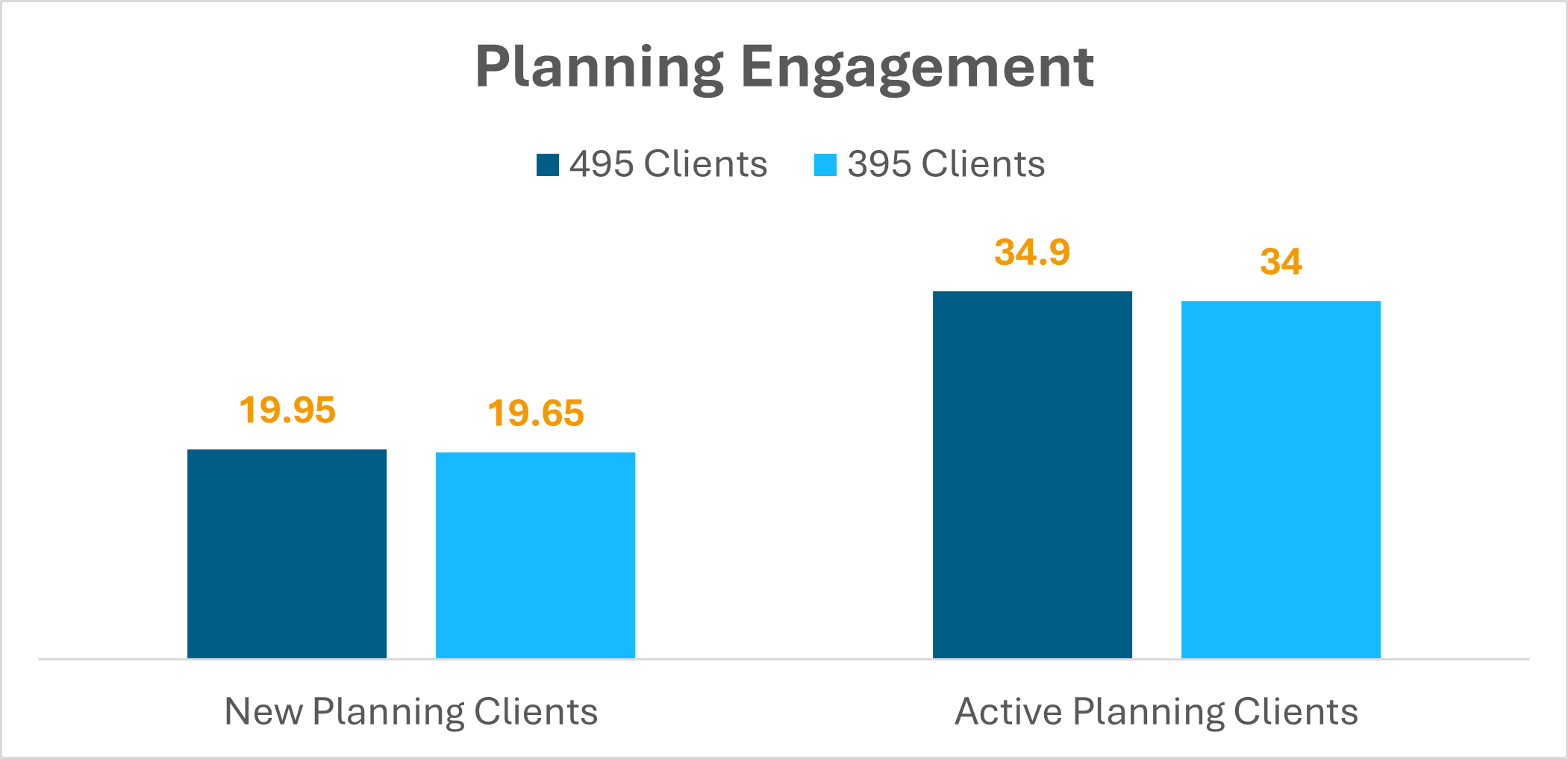
Reducing the number of clients served by an advisor from 495 to395 has no impact on the number of their clients with active plans, or the number of new clients engaged in planning during the past year.
What about planning penetration?
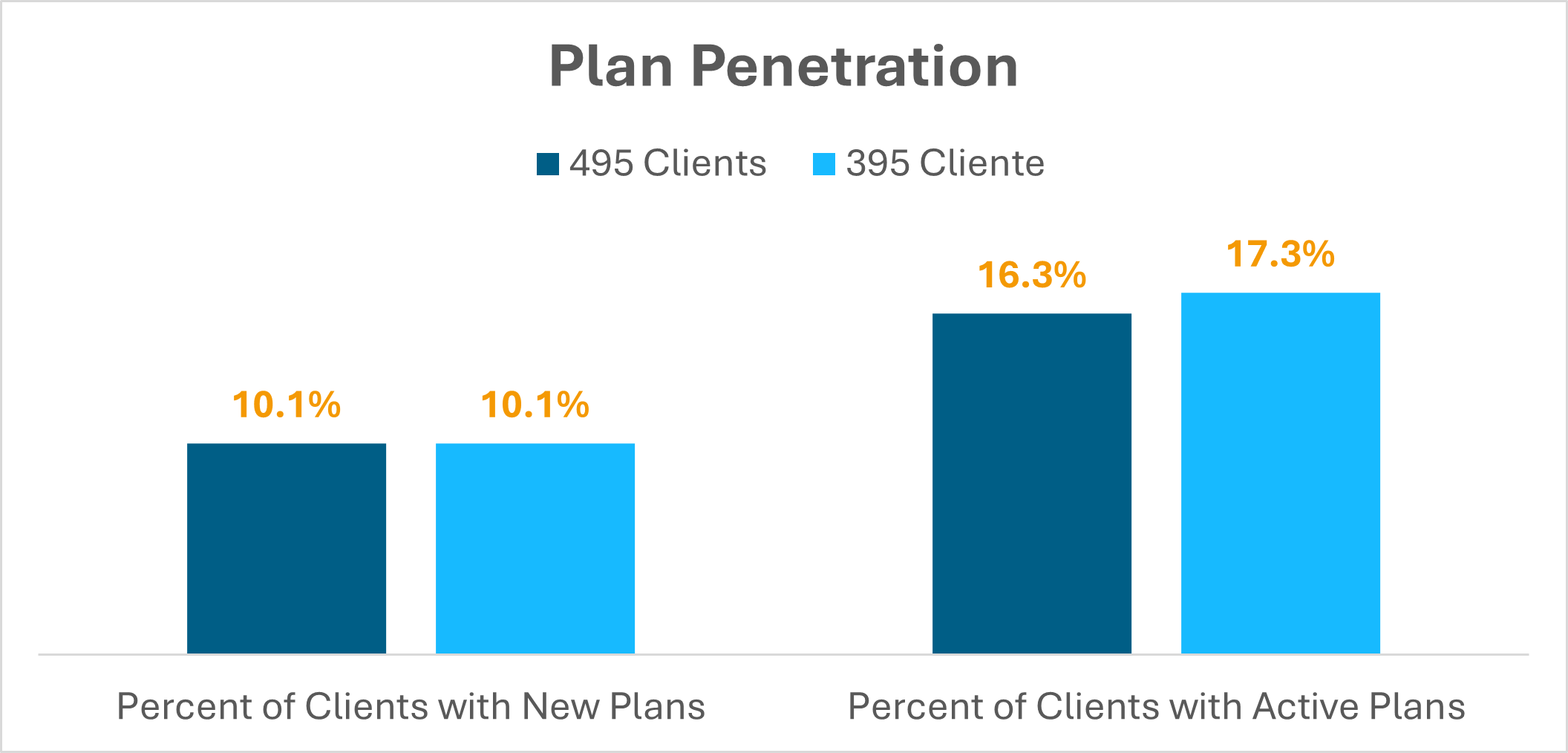
Similarly, rightsizing an advisor’s book has only a minimal impact on the percent of an advisor’s book who are active planning clients, and no impact on the new client planning engagement.
There are reasons to rightsize an advisor’s book, but apparently encouraging financial planning is not one of them.
This analysis is part of a larger study by Kehrer Group sponsored by Raymond James Financial Institutions, “Win the Financial Planning Race: Best Practices in Driving Planning Engagement in Financial Institutions.”
Future Highlighters will examine other levers in the Director’s toolkit, and their efficacy.
Executing on financial planning requires more than advisor intent – it requires scalable infrastructure. Raymond James supports financial institutions with integrated capabilities designed to address the operational, capacity and expertise constraints identified in the research.
The study findings were previewed by Raymond James’ Grace Austin during a concurrent session at the recent Annual BISA Conference in Tampa.

Two Birds, One Stone: How Managers Have Encouraged Advisors to Embrace Financial Planning Insurance Services

About Raymond James Financial Institutions
Advisors in the Raymond James Financial Institutions Division are generating, on average $890,000 in revenue, driven by the services that only a full-service broker-dealer can provide — including investment banking services, wealth and longevity planning, robust technology tools, curated advisor training, and a specialized financial institution support team — all of which help partners grow their investment programs, deepen relationships, integrate within the broader banking teams, and generate higher revenue per advisor.

About Kehrer Group
Kehrer Group is the bank and credit union financial advice community’s trusted partner for original thought leadership, insight based on data, and strategies that drive success. Kehrer Group’s legacy of research and analysis has advanced the delivery of investment services in banks and credit unions and shaped the industry into what it is today. Kehrer Group’s principals meld the wisdom gained from its long history in the industry with cutting-edge analytics, data that is robust and diverse, and a deep understanding of the key drivers of performance.
Learn more about what we do.